Color, grain, and natural character make every hardwood board different. Explore the woods we commonly work with, then tell us which look feels right for your piece.
These woods are our usual starting point. Exact color and grain vary from board to board—that natural variation is part of what makes a handcrafted piece unique.
01
Deep brown · expressive grain
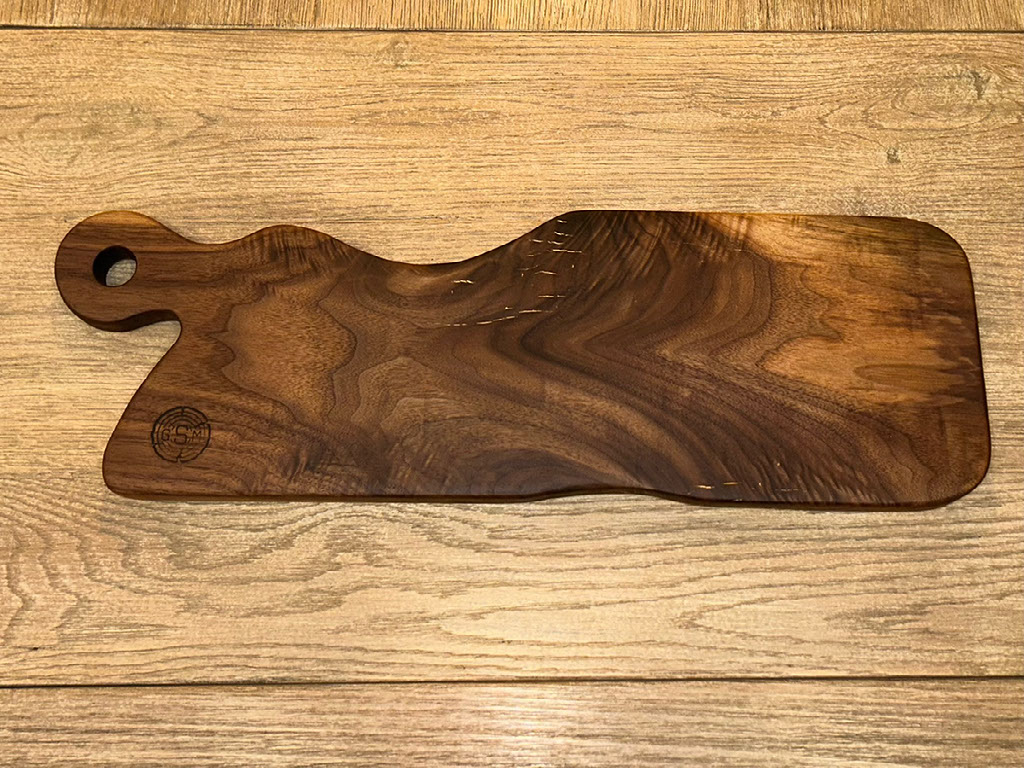
Walnut
Walnut gives a board a rich, dramatic look. Its chocolate-brown color and flowing grain make it especially striking on serving boards, handles, and designs paired with lighter woods.
Hardness
Medium-hard
Natural color
Chocolate brown to purplish brown, sometimes with lighter sapwood
Grain pattern
Usually straight, with occasional curls, waves, and dramatic figuring
Consider it for
Dark contrast, statement pieces, and warm modern designs
02
Creamy light color · fine grain
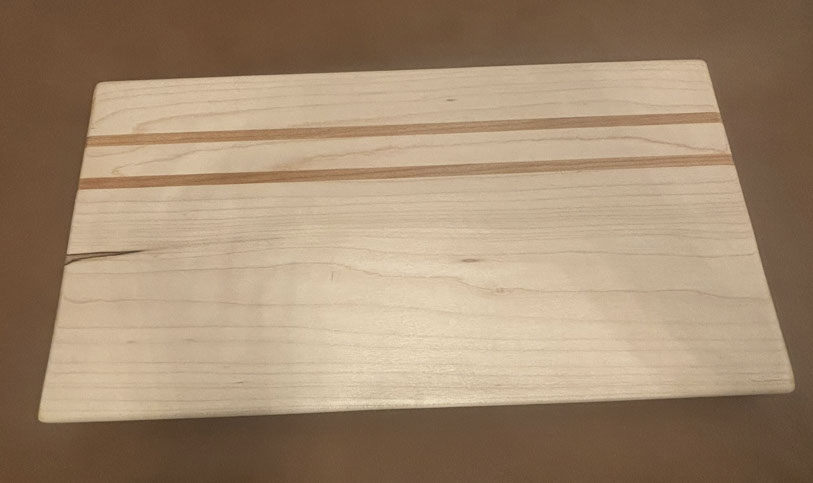
Maple
Maple has a clean, bright appearance with subtle grain. It works beautifully as the main wood in a board or as a light accent beside walnut, cherry, or Purpleheart.
Hardness
Hard and durable
Natural color
Creamy white to pale golden tan
Grain pattern
Fine and generally straight, with subtle waves or figuring in some boards
Consider it for
Clean designs, light-colored boards, and high-contrast inlays
03
Warm red-gold · smooth grain
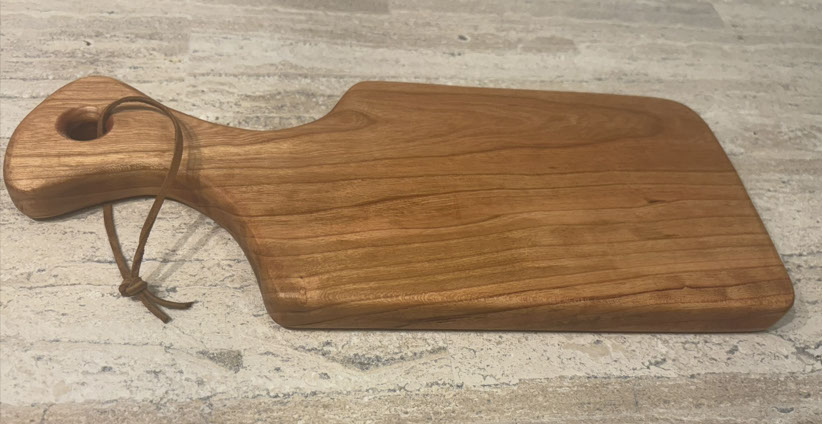
Cherry
Cherry begins with a warm golden-red tone and naturally deepens over time. Its understated grain creates a classic look that feels at home in both traditional and modern kitchens.
Hardness
Medium-hard
Natural color
Golden pink to reddish brown, deepening naturally with age and light
Grain pattern
Fine, smooth, and usually straight, sometimes with gentle waves
Consider it for
Classic boards, warm color, and graceful serving paddles
04
Golden color · dramatic dark lines
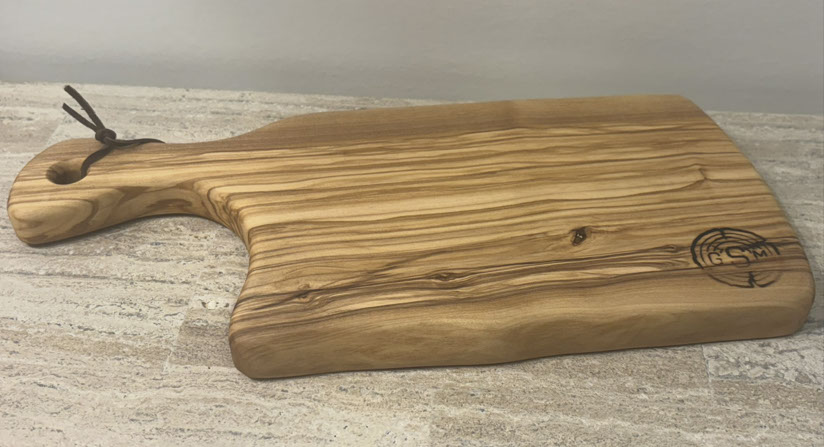
Olive wood
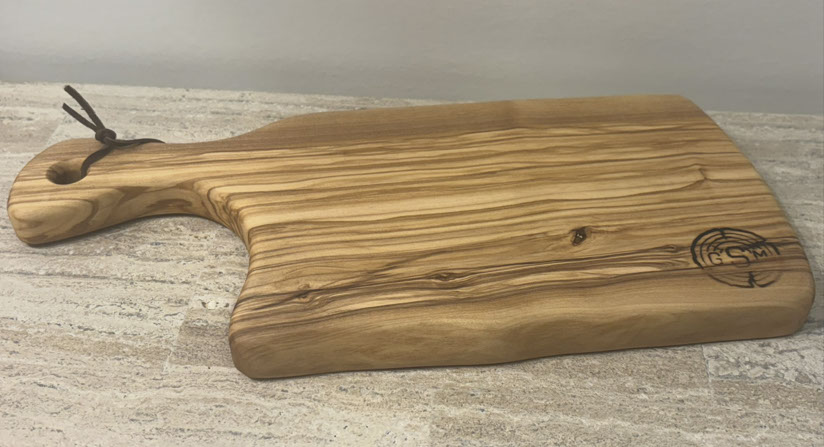
Every piece of olive wood is distinctive. Its swirling dark lines and naturally varied edges make it ideal when the wood itself should be the centerpiece of the design.
Hardness
Very hard and dense
Natural color
Creamy gold to warm yellow-brown with dark brown or black streaks
Grain pattern
Wild, swirling, and irregular; every piece has a different pattern
Consider it for
One-of-a-kind serving boards and sculpted shapes
05
Light to medium brown · bold variation
Hickory
Hickory can shift from pale cream to warm brown within the same board. That natural contrast gives geometric patterns and mixed-wood designs a strong, handcrafted character.
Hardness
Very hard and impact-resistant
Natural color
Pale cream through tan and reddish brown, often within the same piece
Grain pattern
Usually straight and open, with bold natural color contrast
Consider it for
Bold grain, rustic character, and patterned glue-ups
A simple way to choose
Start with the feeling you want.
Light and cleanMaple
Warm and classicCherry
Dark and dramaticWalnut
Bold and rusticHickory
Natural and one of a kindOlive wood
Wood combinations
Contrast makes the pattern.
A board can use one wood throughout or combine species for stripes, inlays, and geometric patterns. These are useful starting points—not limits on what you can request.
Walnut + maple
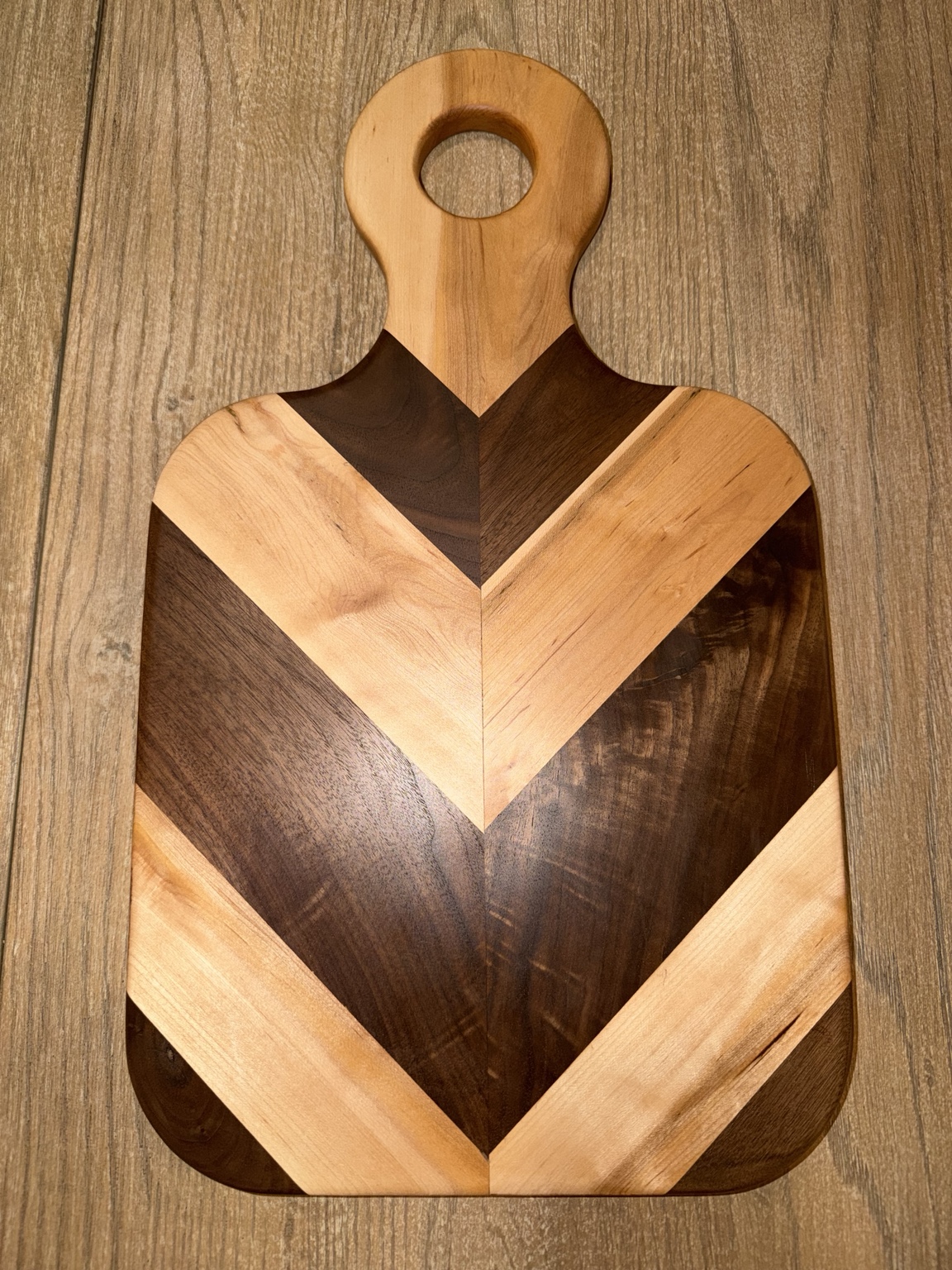
Our strongest light-and-dark contrast. A dependable choice for crisp stripes and bold patterns.
Cherry + maple
A softer, warmer pairing that becomes richer as the cherry naturally deepens in color.
Hickory + walnut
Natural variation and dark contrast give chevrons and mixed patterns a handcrafted character.
Olive wood on its own
Olive wood already carries its own pattern. A simple shape lets its dramatic grain remain the focus.
Limited and specialty woods
For an unexpected accent.
We can sometimes source specialty woods for an inlay, accent, or distinctive design. Availability, cost, and suitability depend on the individual project and are confirmed before we prepare a final estimate.
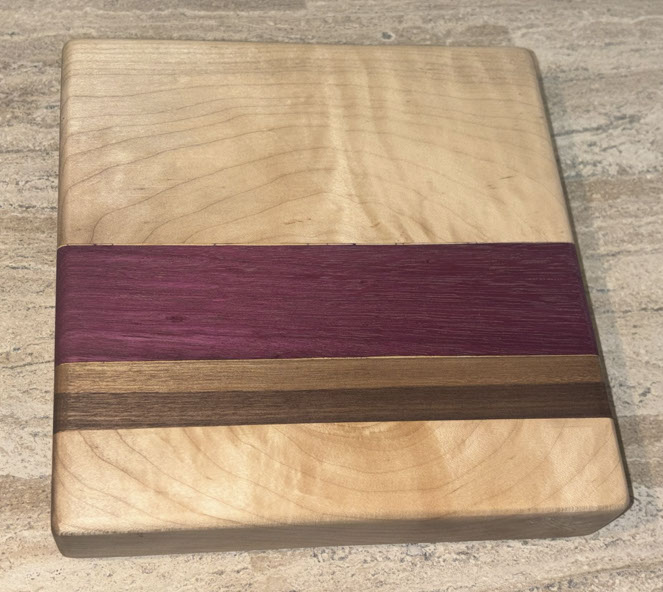
GSM project example · Purpleheart and walnut accents in maple
Purpleheart
Most often used as an accent or inlay to add a distinctive line of natural color.
Hardness
Very hard and dense
Natural color
Brown when freshly cut, maturing to a vivid violet-purple before slowly darkening
Grain pattern
Usually straight, though some pieces show waves or interlocking grain
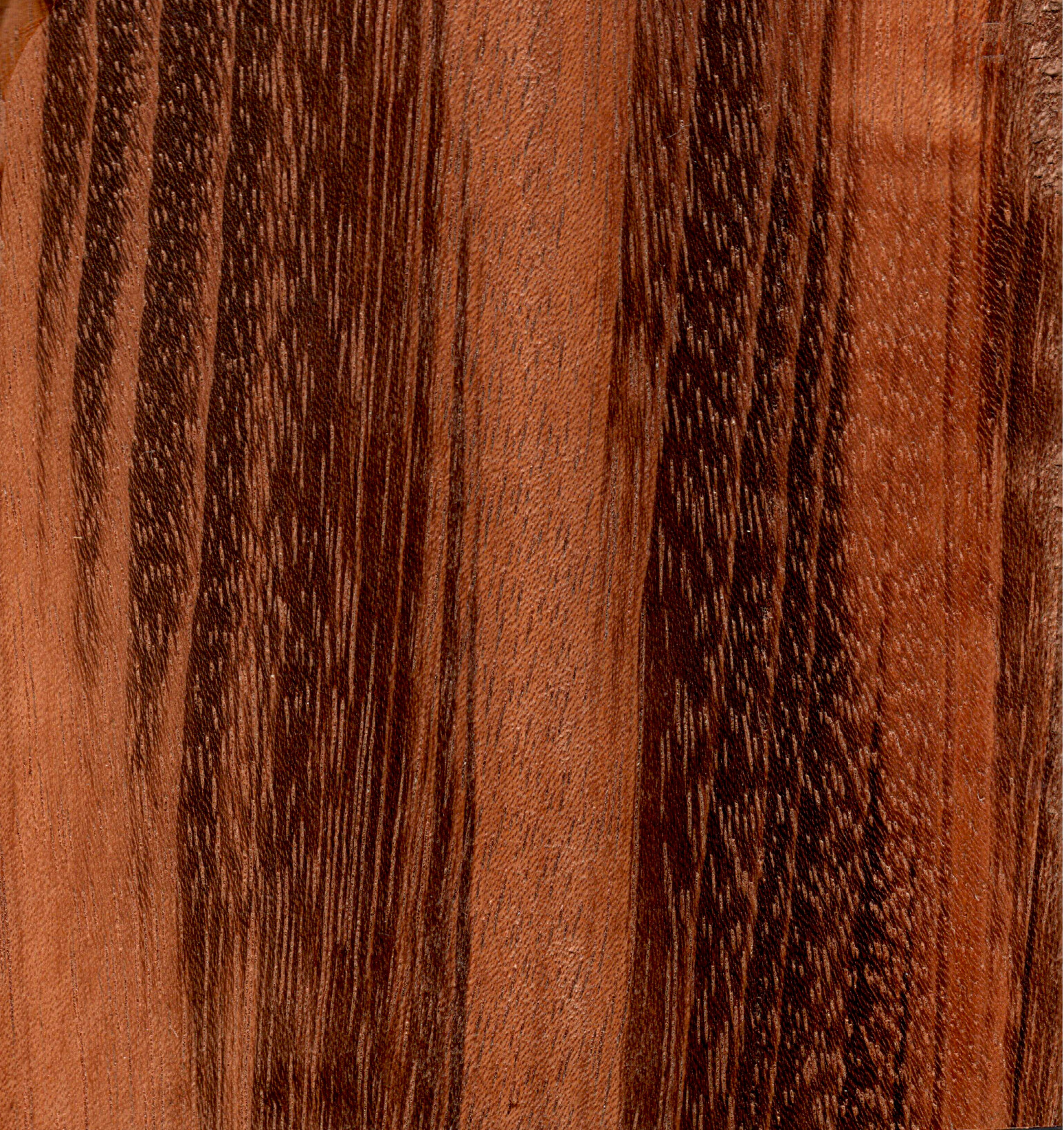
Rare and tightly regulated. Any use depends on verified legal stock, availability, and whether it suits the project.
Hardness
Extremely hard and dense
Natural color
Rich reddish brown to chocolate or purplish brown with darker streaks
Grain pattern
Usually straight, but often richly figured or interlocked with strong contrast
About hardness: These are practical comparisons, not guarantees. Hardness and appearance vary by species, growing conditions, and the individual piece of lumber.
Have a combination in mind?
Let’s turn it into a board.
You do not need to know the perfect species before you begin. Tell us the colors and character you like, and we’ll help narrow down a buildable combination.
A note about the finished piece: Our food-safe oil and board butter deepen the wood’s natural color. Grain, tone, and figuring will vary from the examples shown here.